Fairburn Engineered Farm Drainage & Erosion Control
Fairburn, Georgia | Engineered Farm Drainage & Erosion Control
Reconstructing failed drainage and establishing a high-capacity, rock-lined channel to safely carry runoff from the property’s upper pastures.
The Project
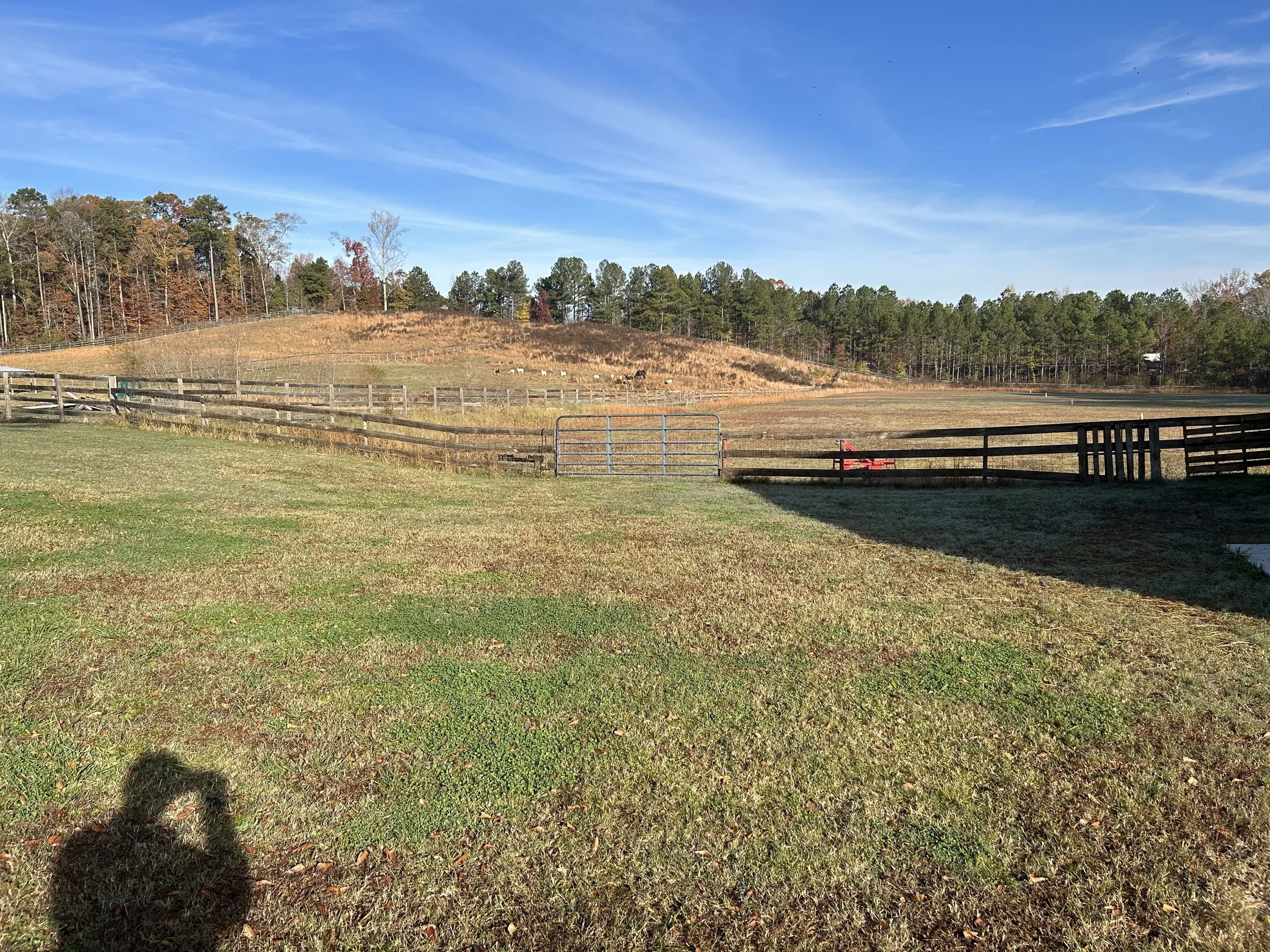
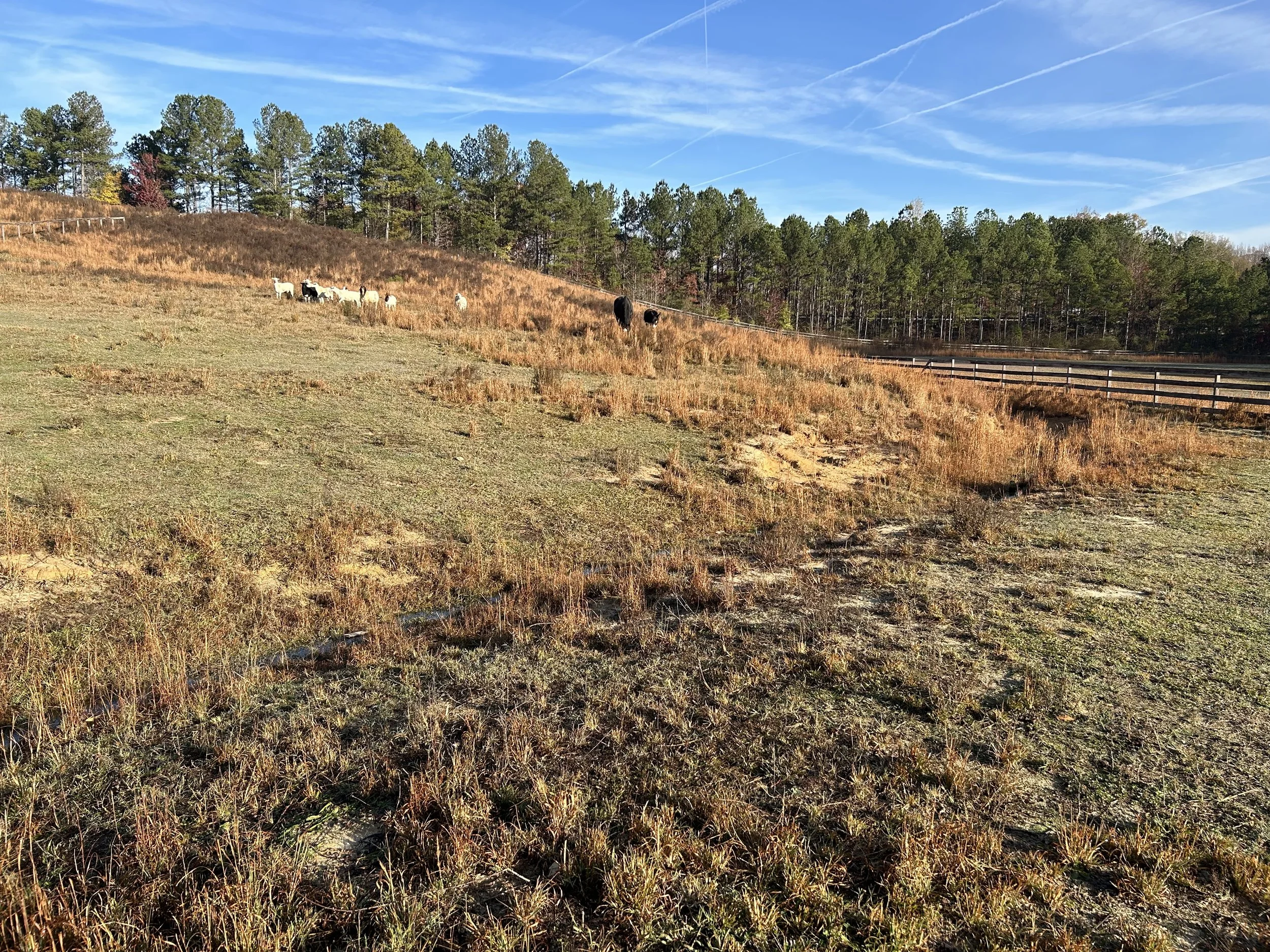
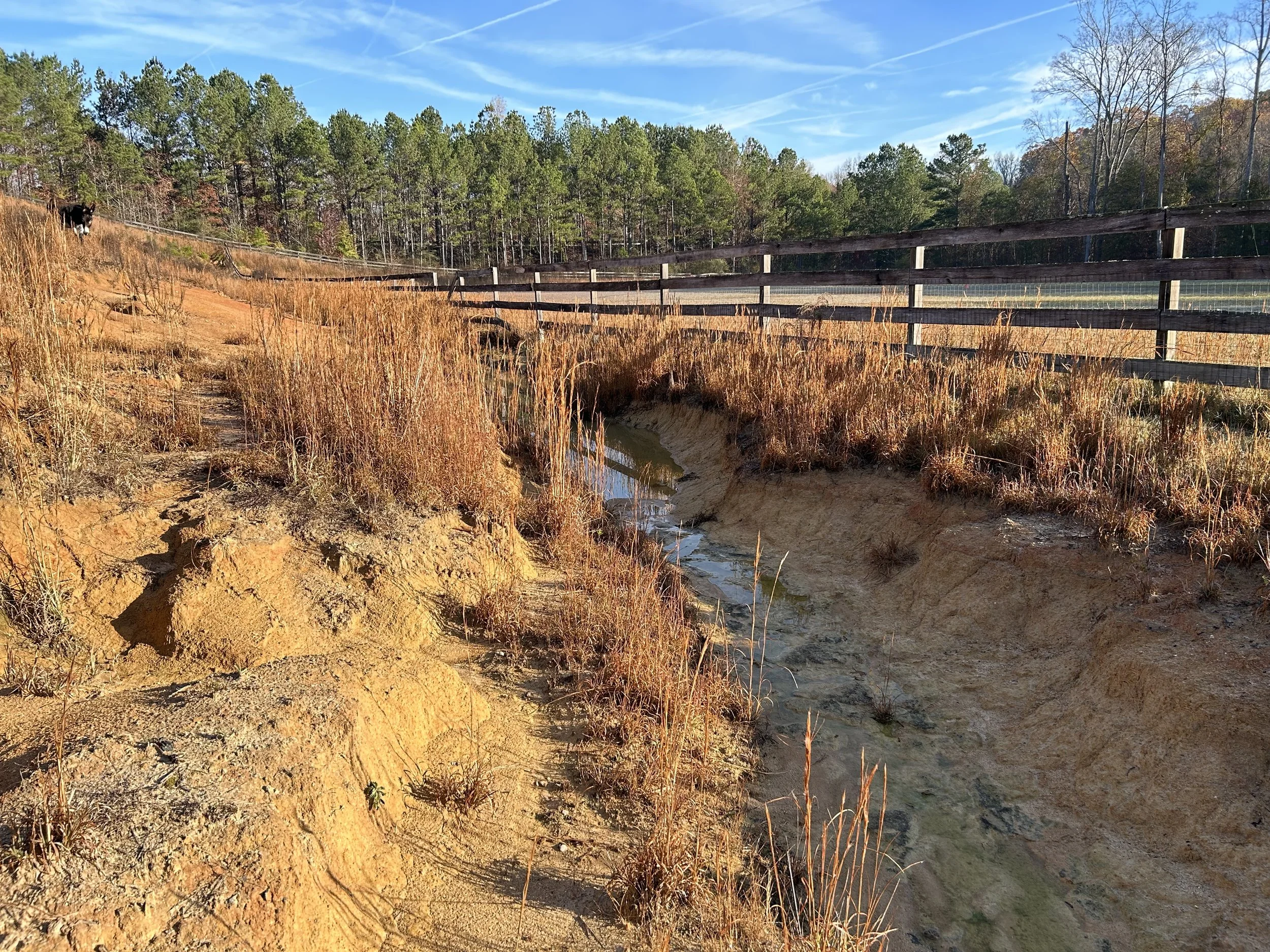
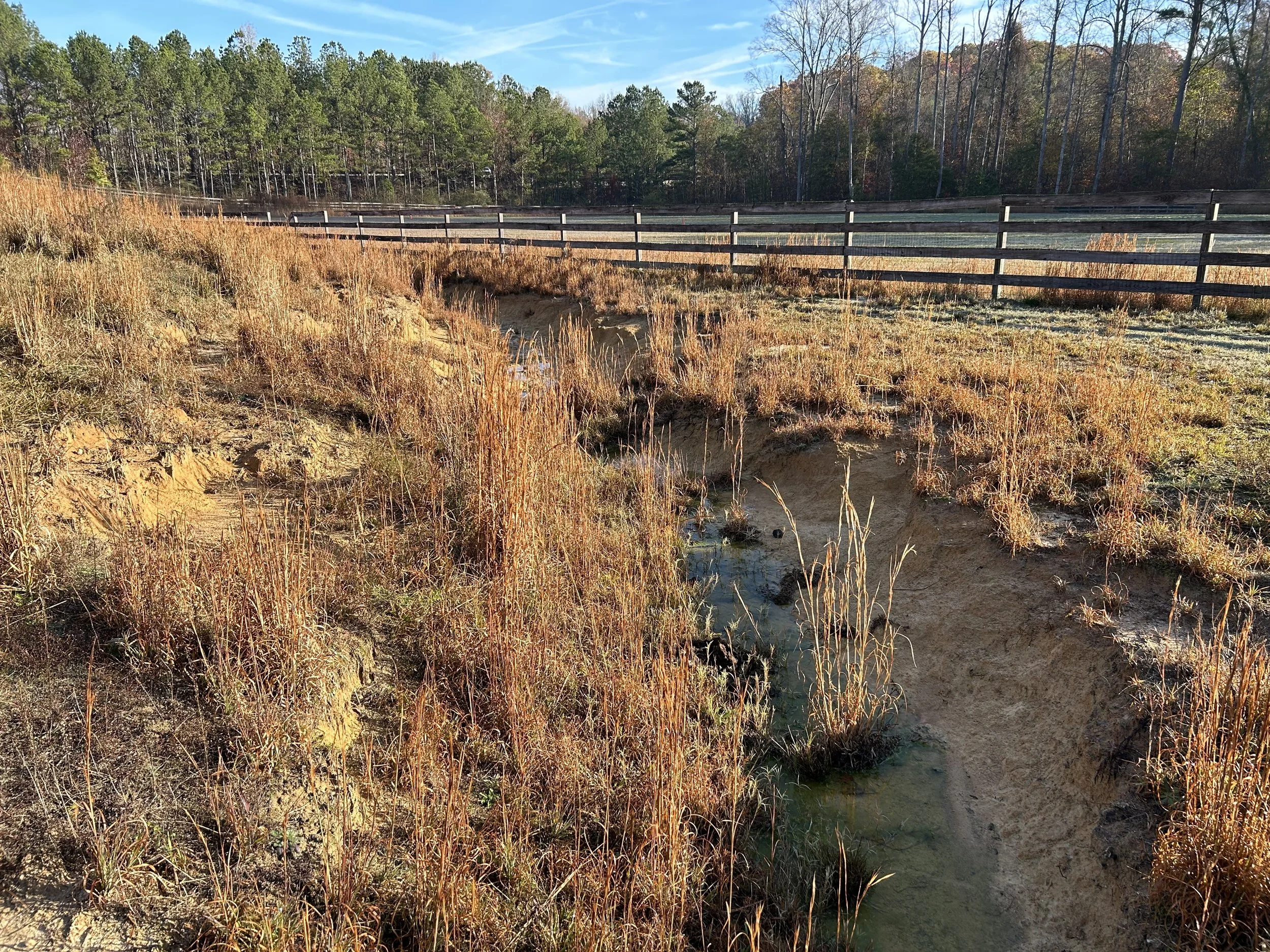
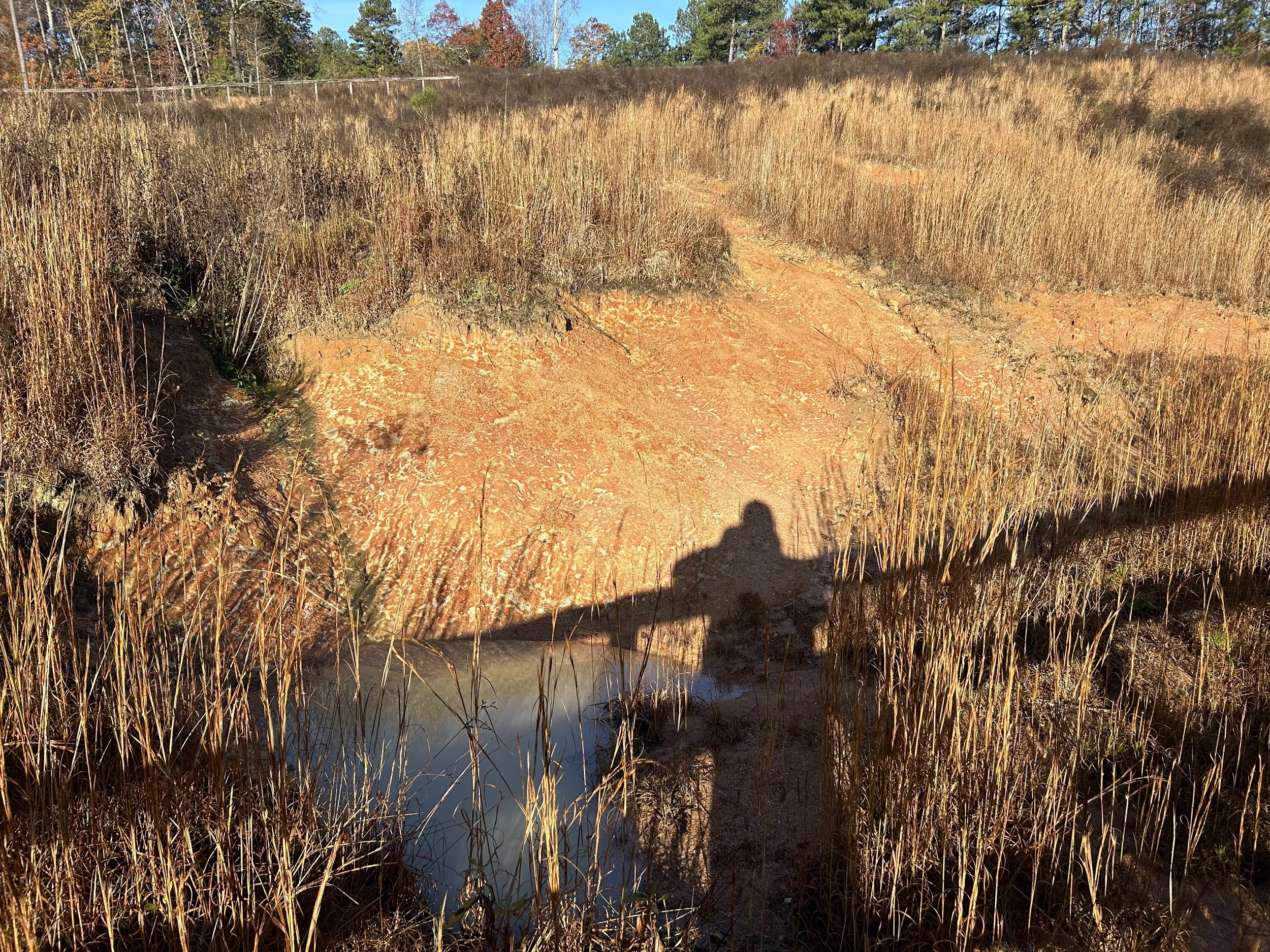
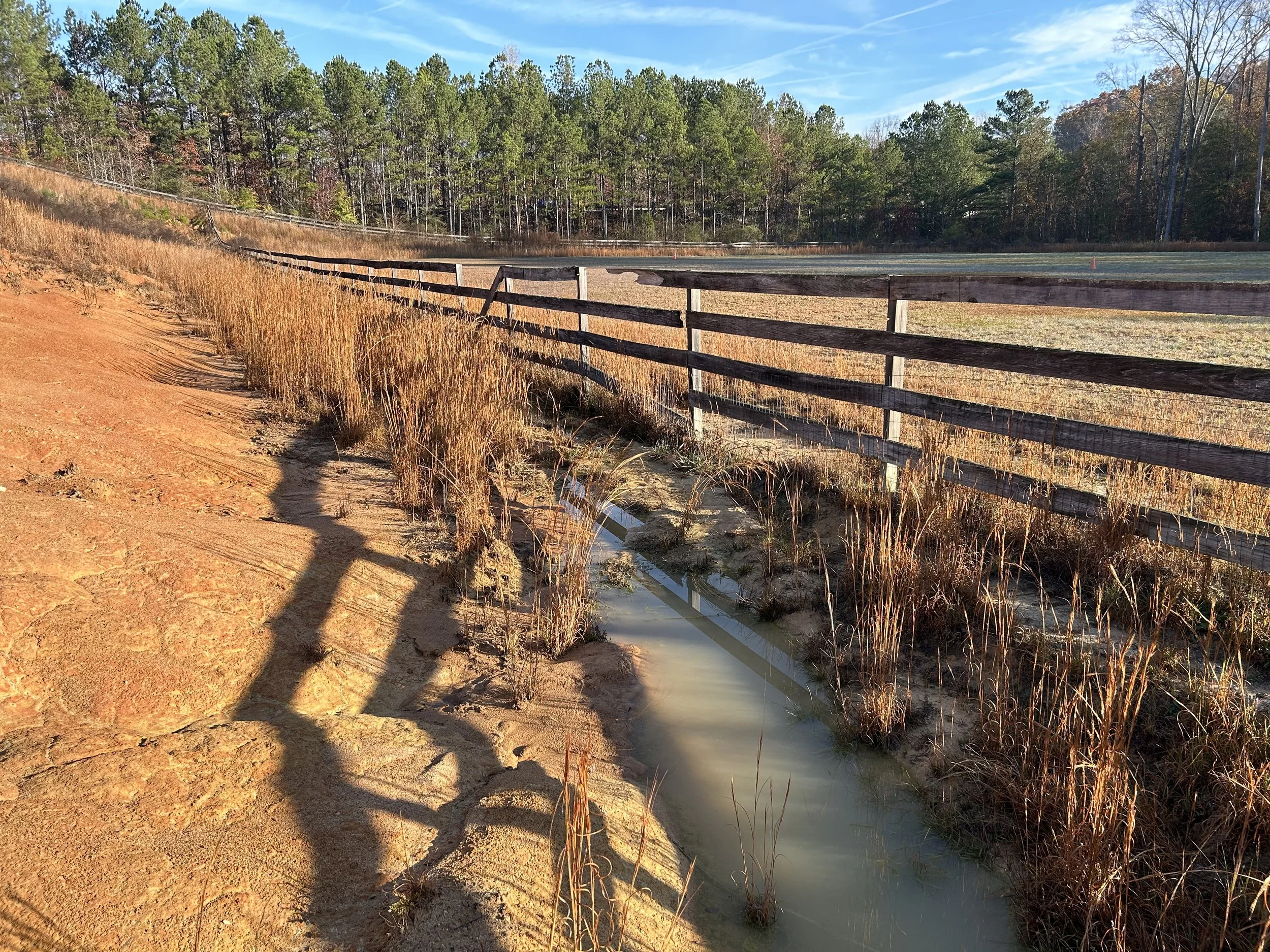
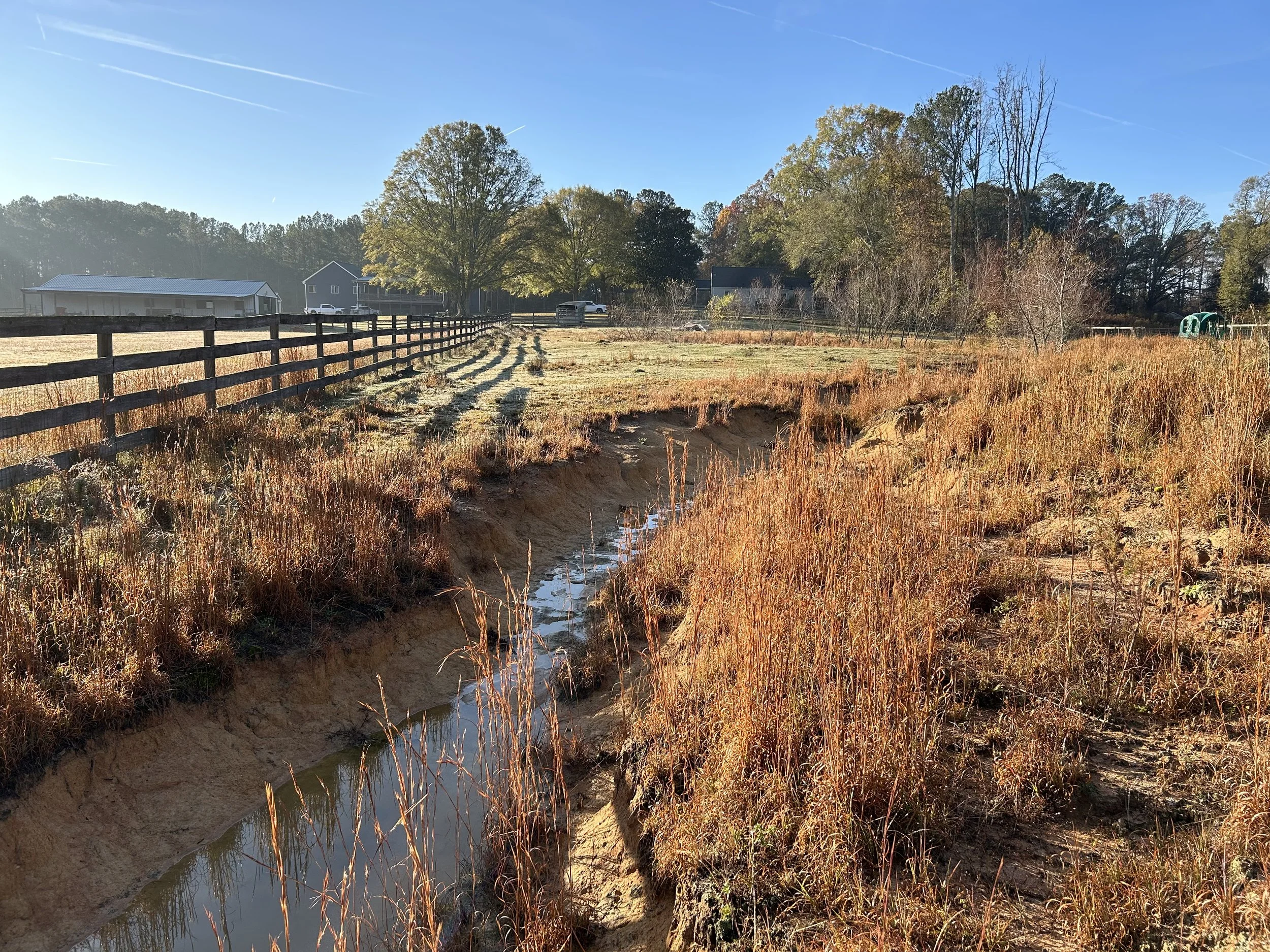
The property’s upper pastures drain a substantial hillside watershed toward the lower portion of the farm and around the polo field. During the property’s initial clearing and development, heavy runoff across exposed ground caused significant erosion and rutting before grass became established. Although the surrounding pastures later stabilized, the existing drainage path continued to erode and lacked a consistent grade, leaving low areas that held water and remained soft and wet.
The project called for reconstructing a failed dam and spillway at a small livestock pond at the head of the drainage path, then establishing a controlled, armored channel capable of carrying runoff from the upper pastures during larger rain events. The objective was to provide continuous positive drainage through the property while correcting earlier erosion damage and safely conveying water around the polo field toward the downstream end of the site.
The Work
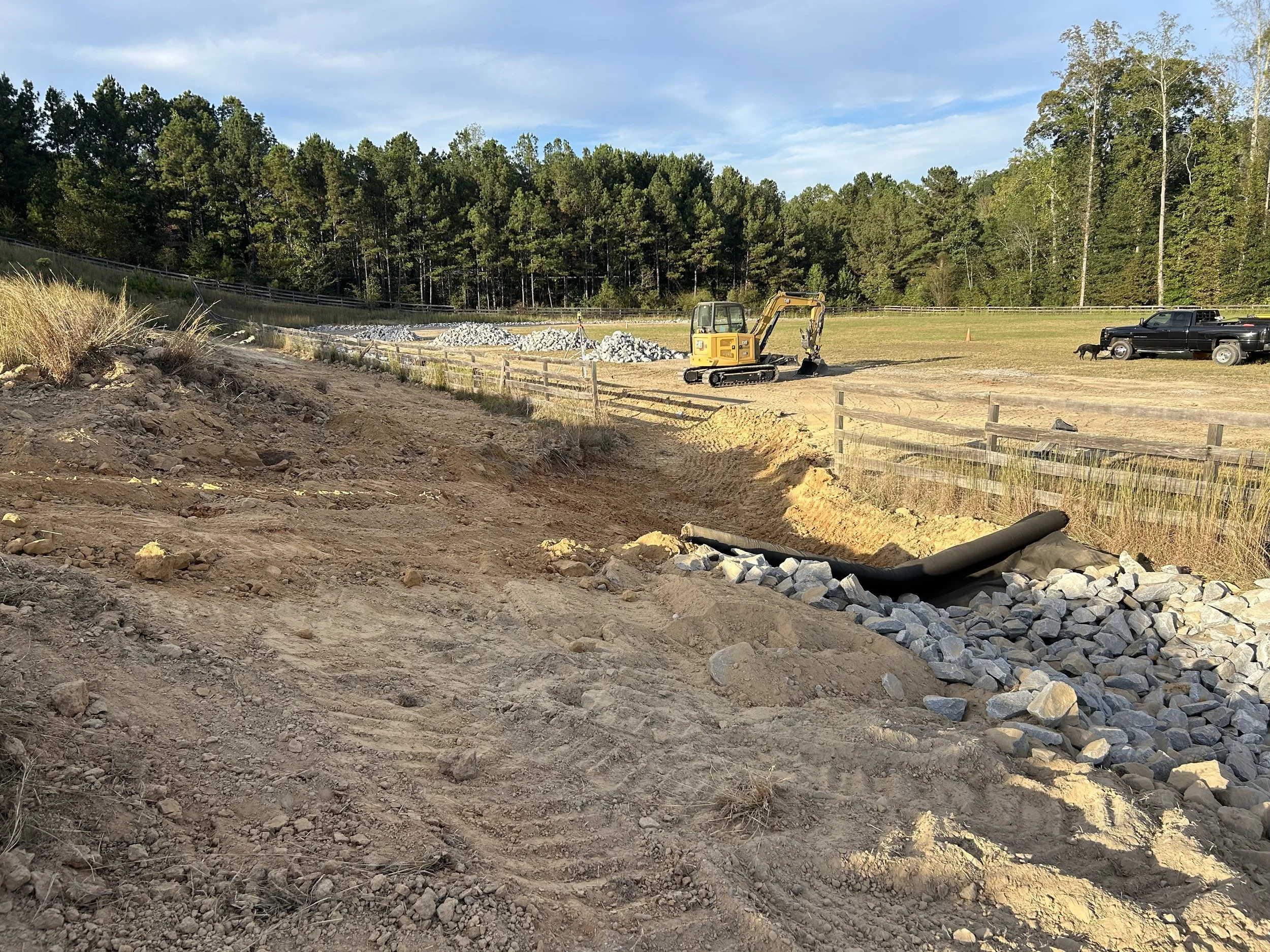
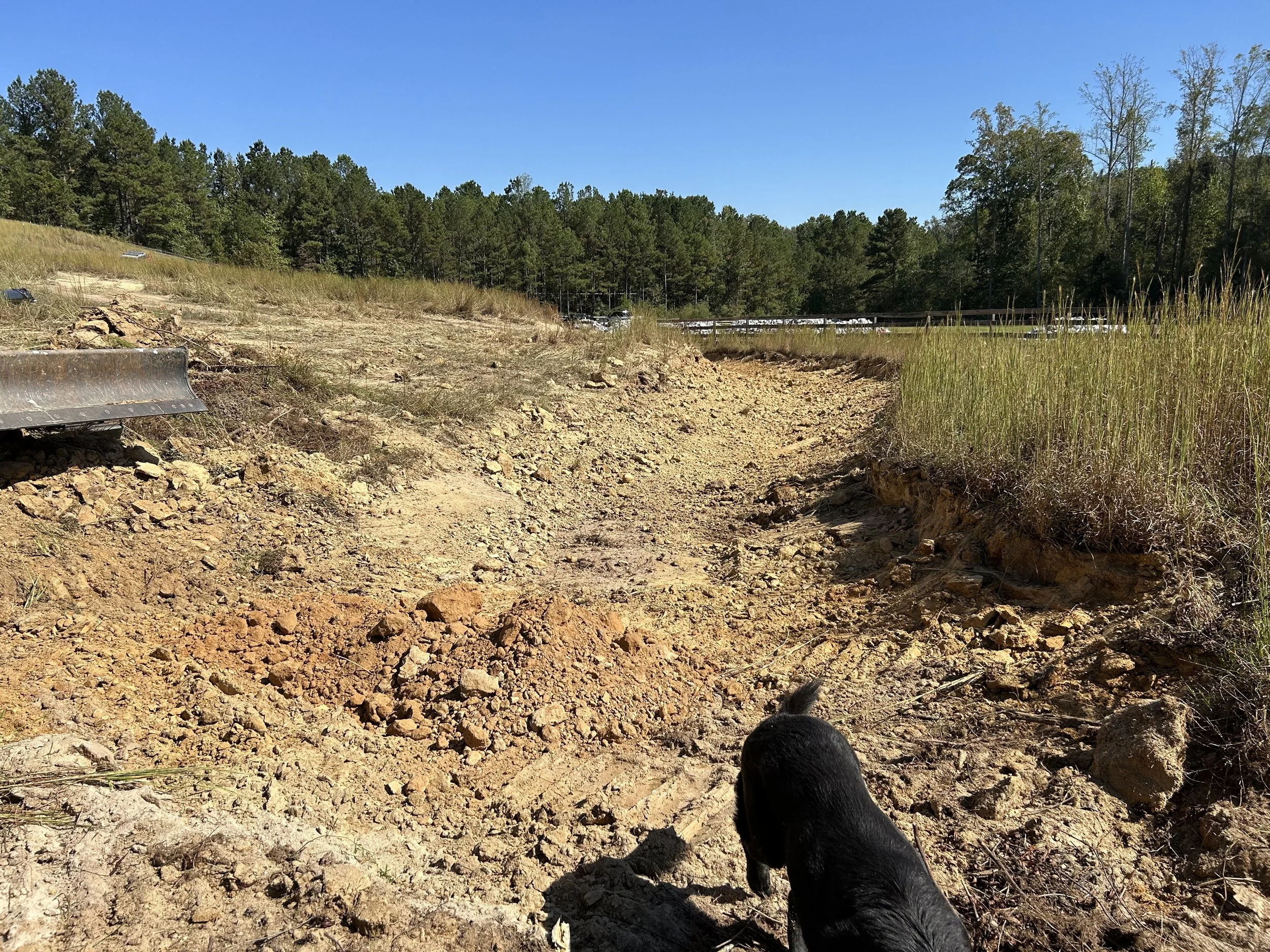
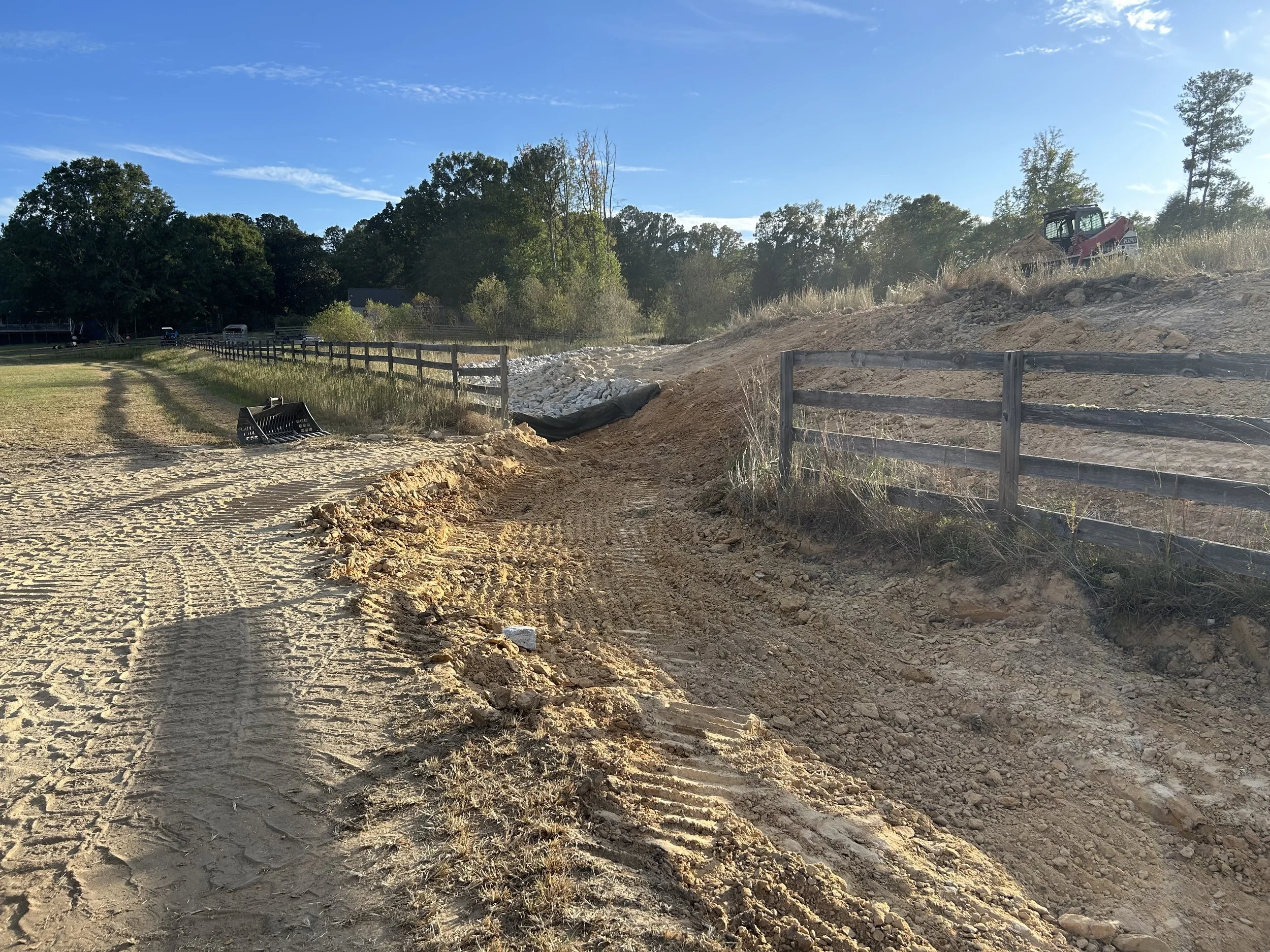
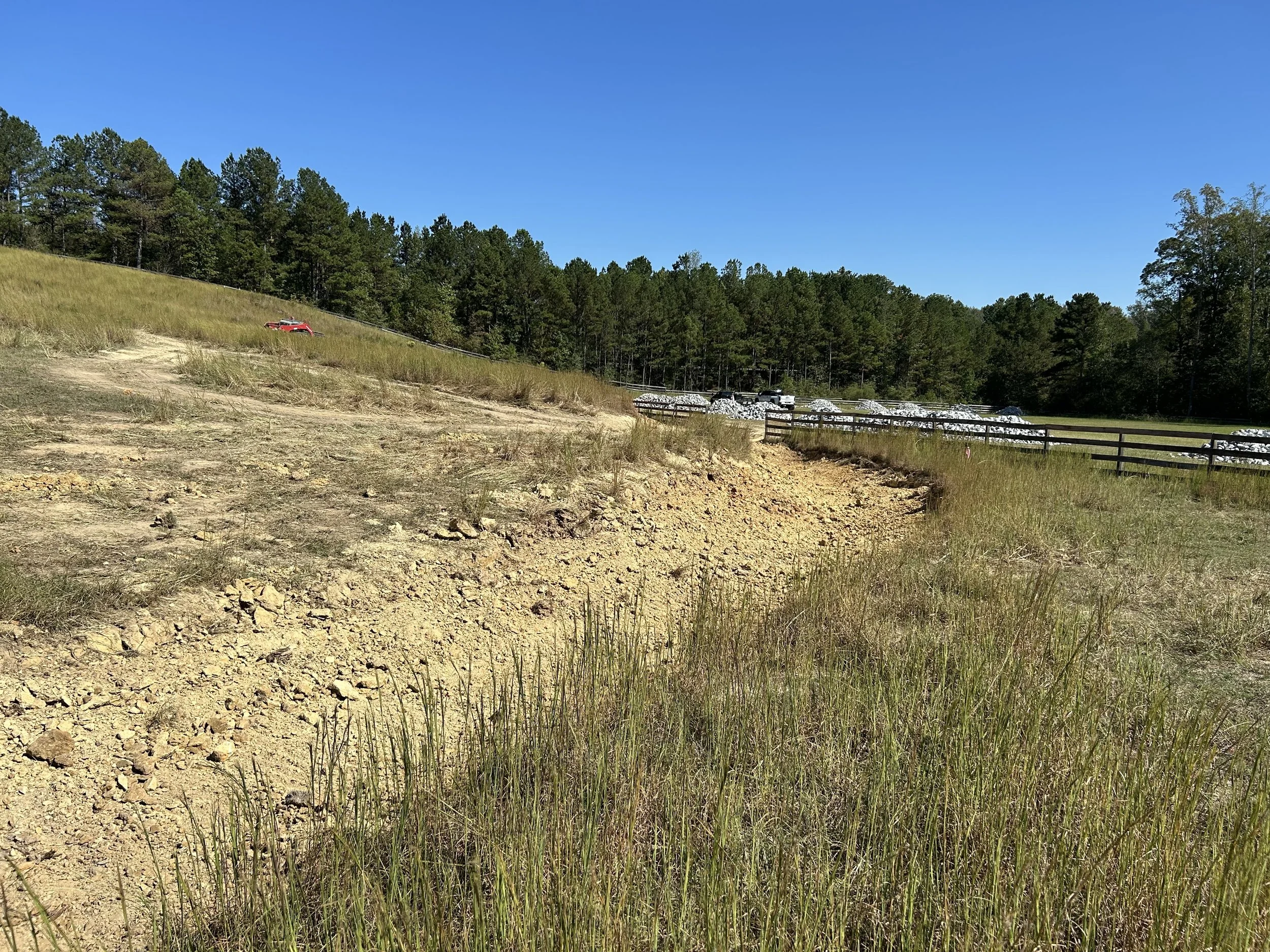
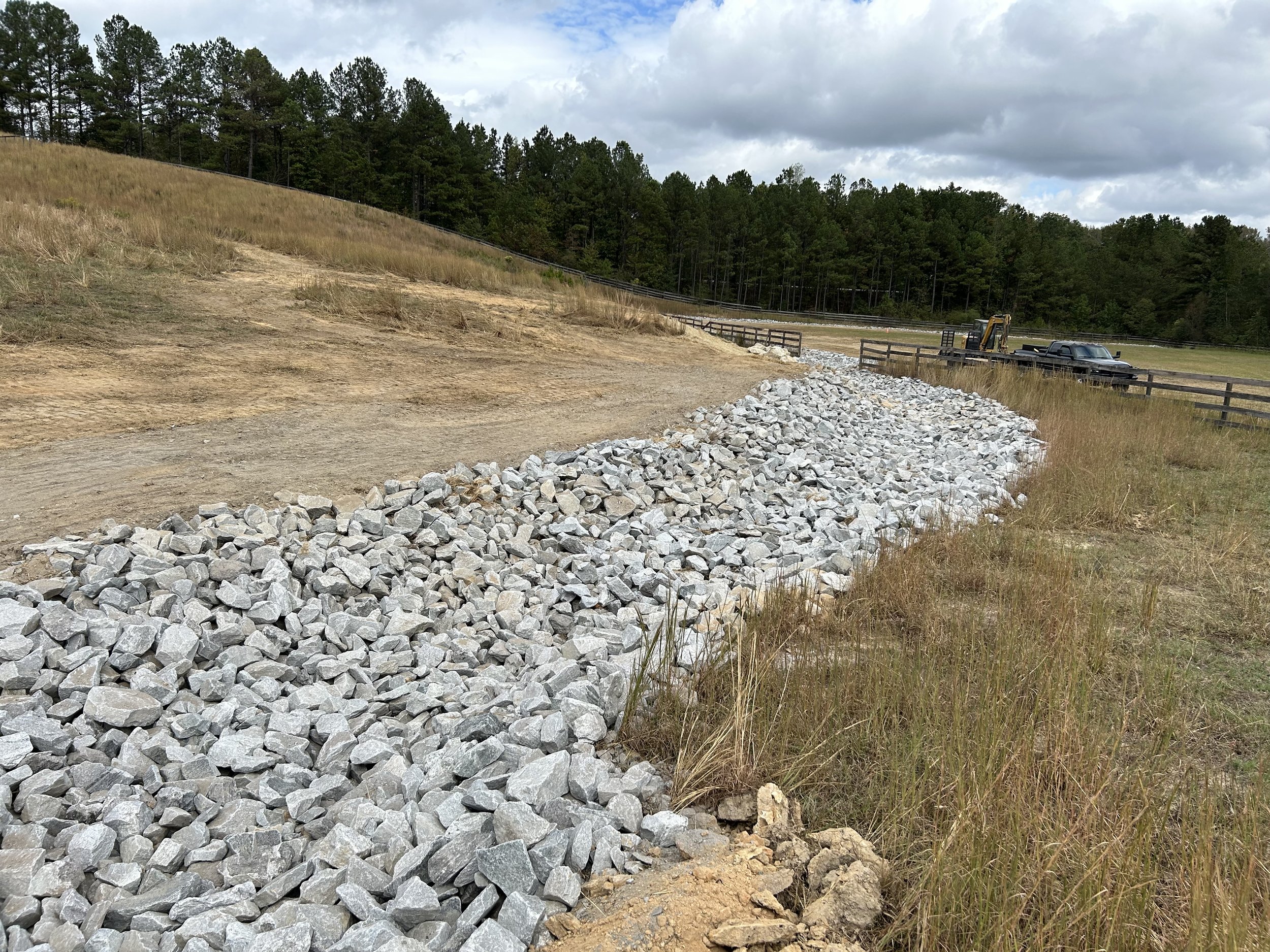
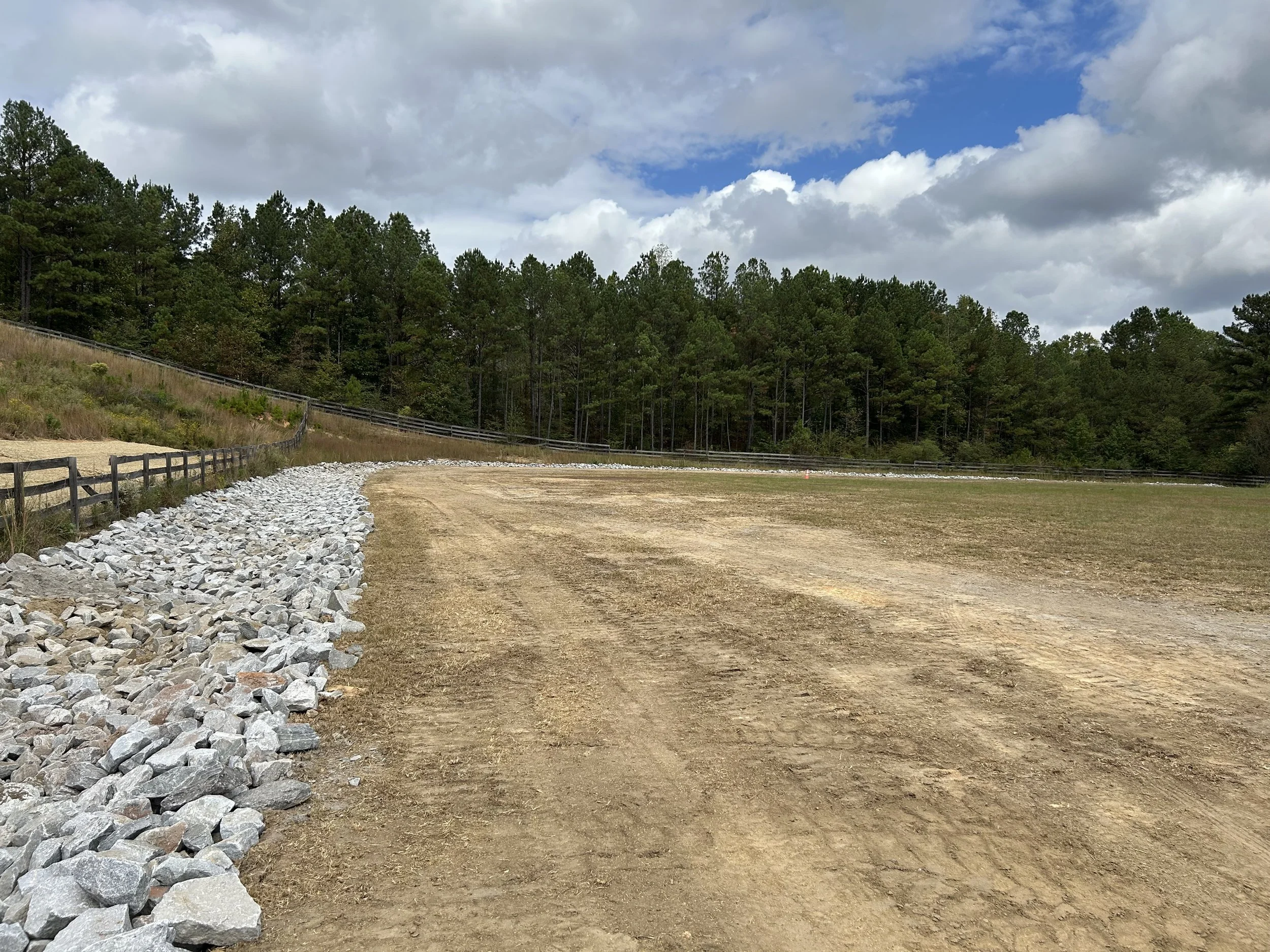
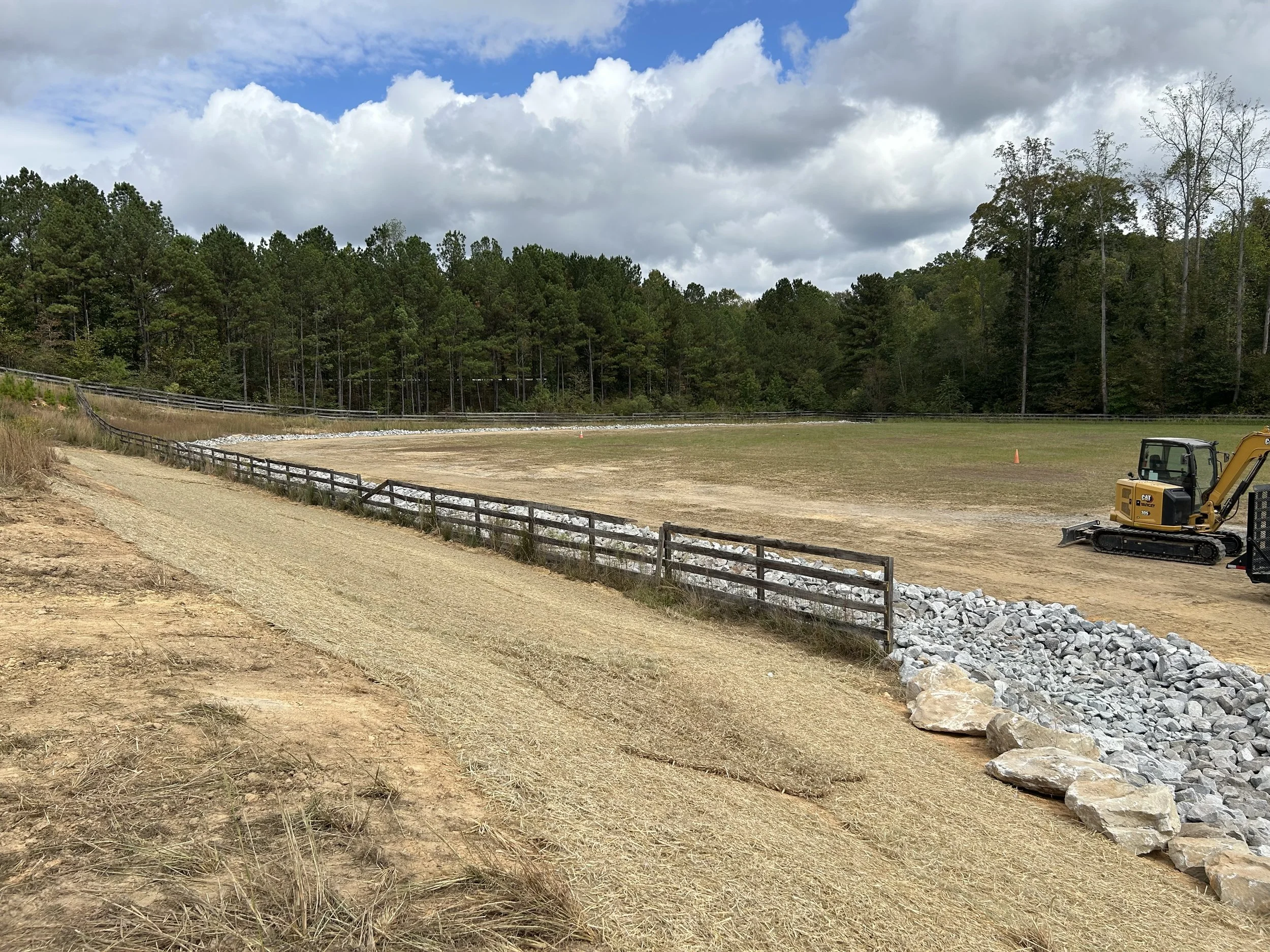
J Wells reconstructed the failed pond dam and spillway at the head of the drainage system, then excavated and established approximately 700 feet of continuous channel through the property. The finished rock-lined channel measures roughly 14 feet wide and, through many portions of the alignment, approximately three feet deep. Achieving the required profile meant excavating to nearly four feet deep through several hundred feet of the channel as existing grades were corrected and tied together.
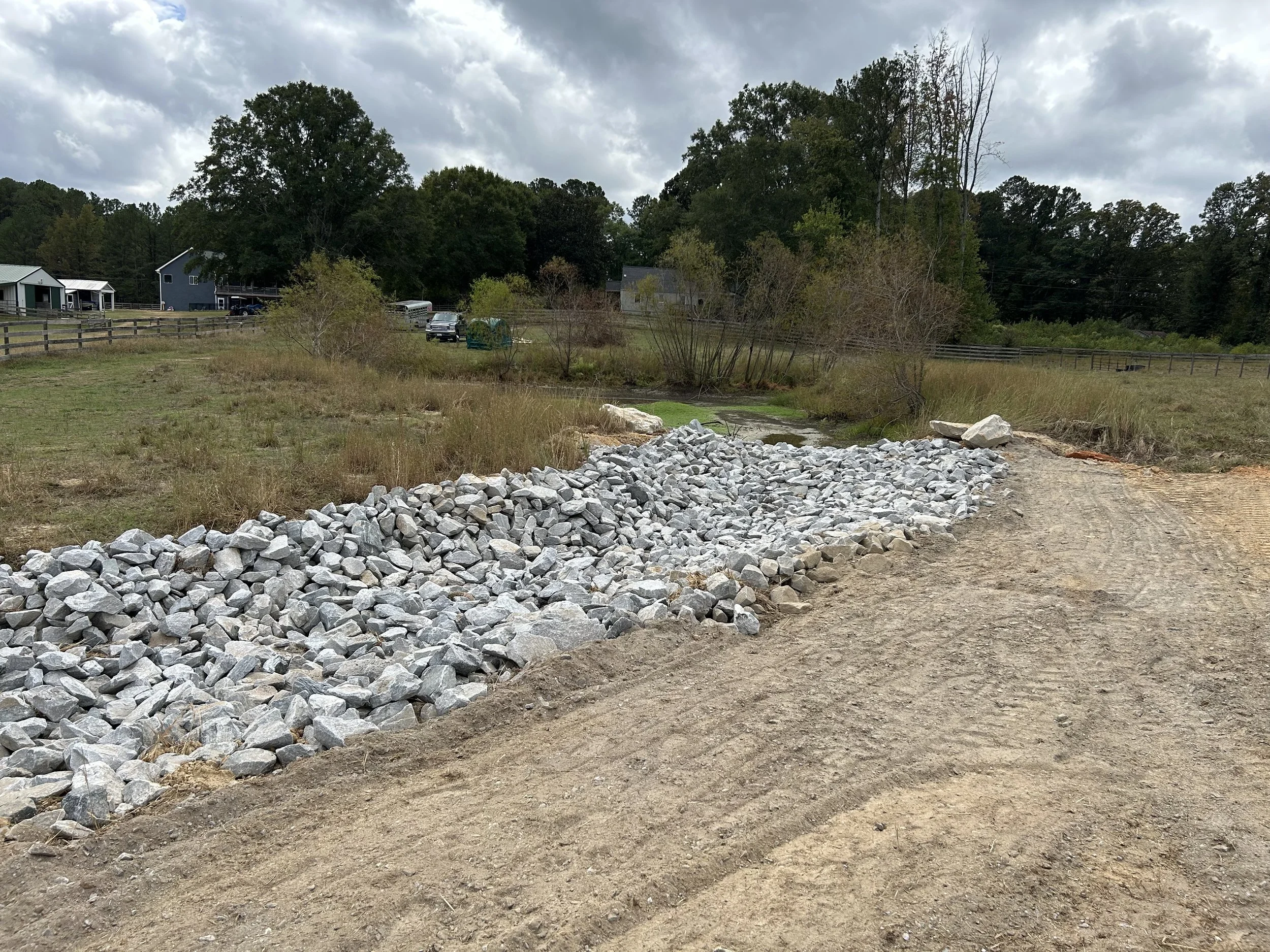
The channel was lined with geotextile fabric and approximately 12 inches of specified riprap, requiring roughly 540 tons of stone. Grades were carefully maintained throughout the alignment to eliminate low areas, preserve positive flow, and provide the capacity and erosion protection needed to carry runoff from the upper pastures during larger rain events.
Because the customer’s finished concrete driveway was not suitable for repeated truck and material traffic, J Wells also constructed a dedicated entrance and culvert crossing from the road. At completion, much of the entrance stone was reclaimed and stockpiled elsewhere on the property for the owner, while the culvert and underlying access remained for future use. The entrance was left so grass could reestablish rather than leaving an unnecessary permanent gravel drive into the pasture.
Excavated material from the channel was reused elsewhere on the property to repair and reshape areas damaged by earlier runoff and erosion, allowing material generated by the drainage work to contribute to restoration of the surrounding site.