

Grading & Site Development
Building Pads • Site Preparation • Land Clearing • Access • Property Improvements
From building pads and major property improvements to difficult access and complex grading, J Wells develops sites around how the finished property needs to work.

Built Around the Finished Site
Good site development starts with understanding what the property needs to become—not simply moving dirt until an area looks level.
J Wells approaches grading around the finished use of the site. Building elevations, access, drainage, usable space, utilities, surrounding slopes, and future improvements all influence how the ground should be shaped before construction moves forward.
Whether developing a building pad, expanding usable property, correcting an existing grade, or preparing a site for the next phase of construction, the goal is to create a stable, functional site that works as a whole.
From Subgrade
to
Finished Grade
Site development often involves much more than a single cut or fill. Existing soils, elevation changes, drainage, access, utilities, structures, material requirements, and the movement of construction traffic all affect how the work needs to proceed.
J Wells handles the earthwork required to bring those pieces together—from clearing and excavation through cut-and-fill grading, imported material, building pads, aggregate placement, compaction, and finished grades.
On plan-driven projects, that work is coordinated around established elevations, specifications, drainage systems, utilities, inspections, and the work of other trades. Field conditions are evaluated as work progresses so conflicts involving grades, soils, drainage, or access can be identified before they create problems for the next phase.
Whether the next step is a building, concrete, paving, utilities, an athletic surface, or simply a finished property ready for long-term use, the objective is the same: build the ground correctly for what comes next.
Featured Grading & Site Development Projects
Explore selected projects showing how excavation, grading, material placement and site planning come together to create stable, functional sites.

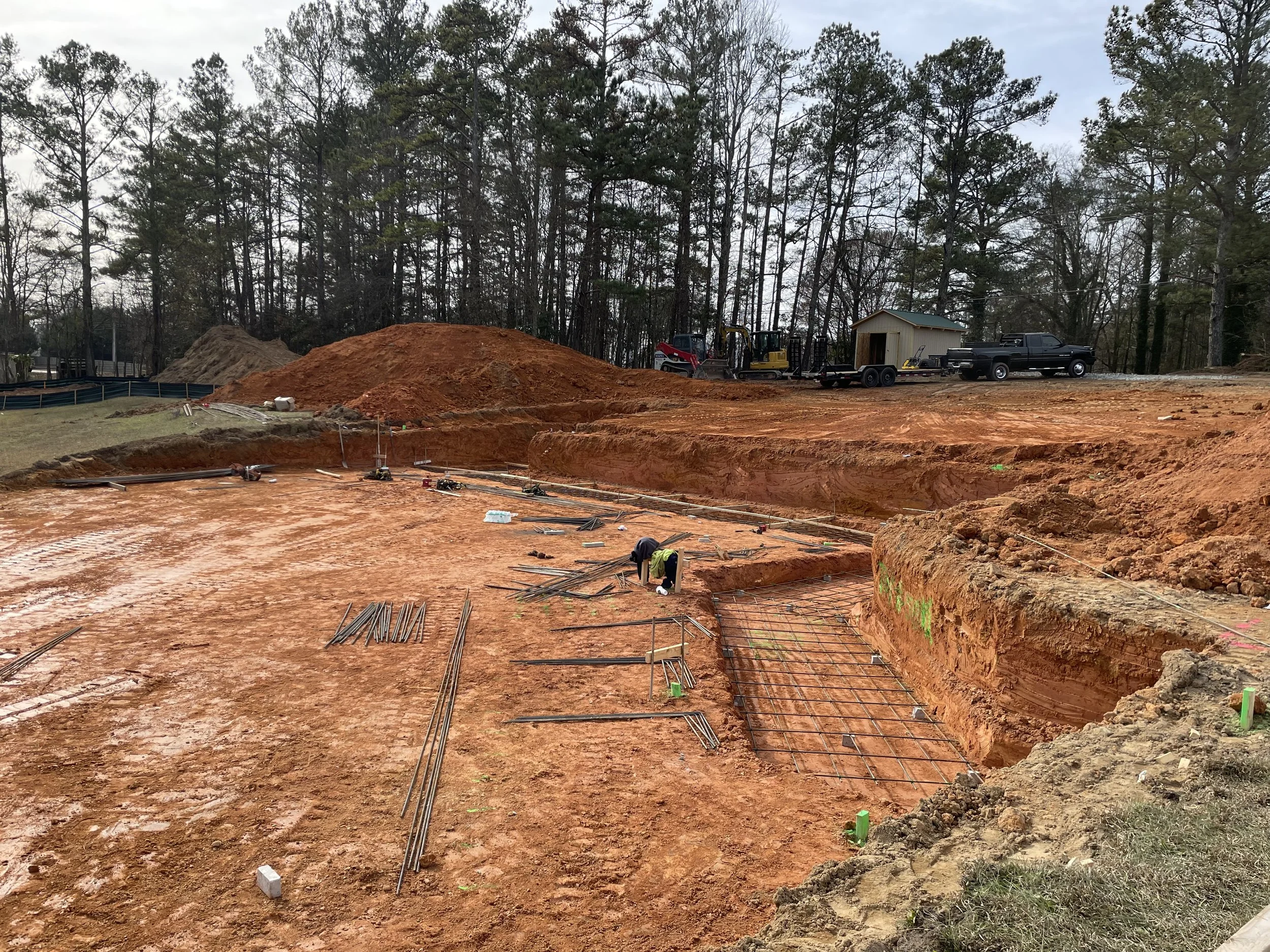
Building pad and site development for a new shop in Adairsville, Georgia. J Wells cut down the existing hilltop to establish the required building elevation, then shaped the surrounding grades to blend naturally back into the hillside. The pad was sized beyond the building footprint to provide appropriate working area and drive access around the structure, with the finished subgrade prepared for the concrete crew to begin forming the slab.
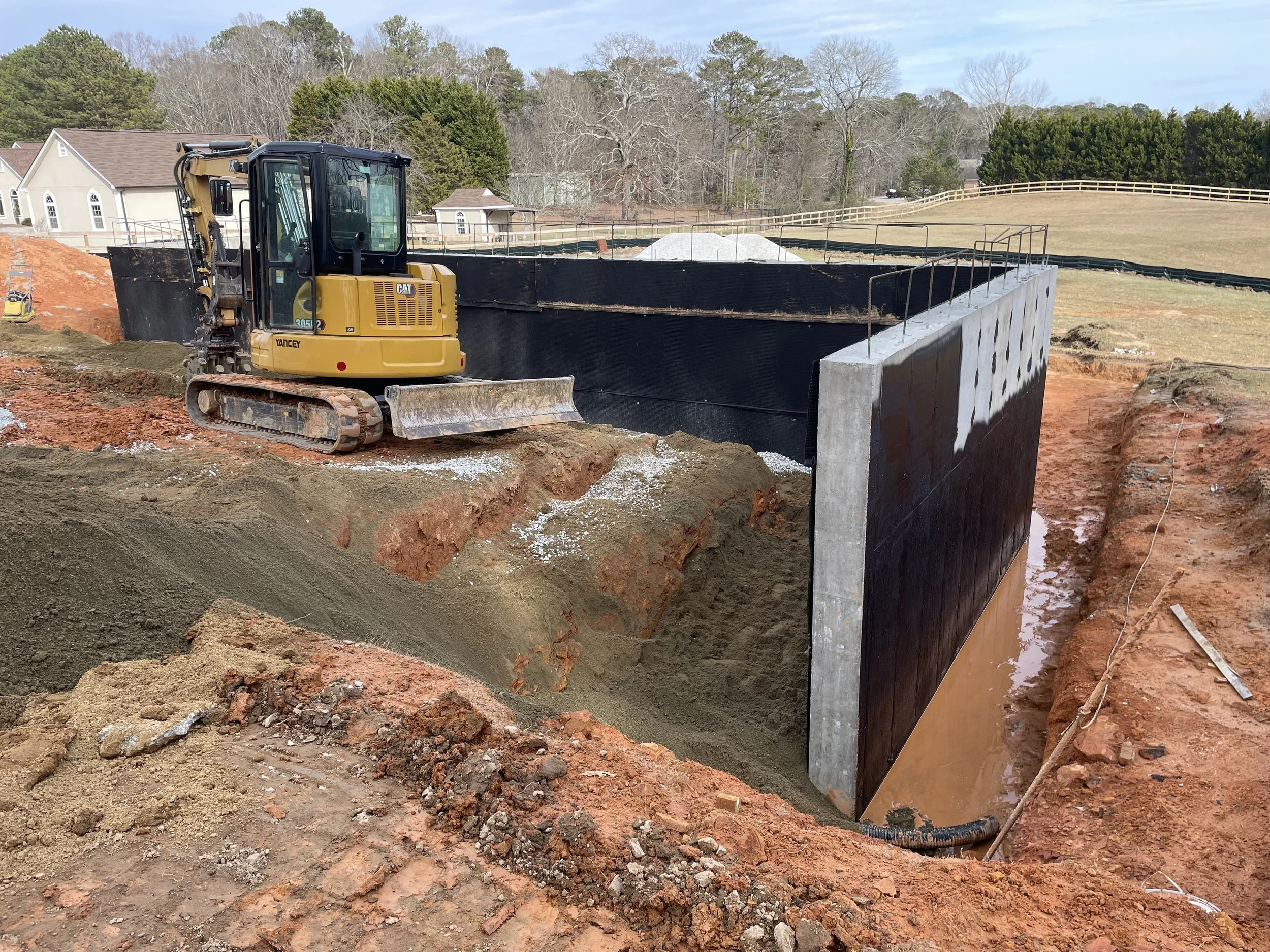
Basement excavation and structural earthwork for a custom home in Powder Springs, Georgia. The site required approximately 11 feet of structural fill to establish the necessary elevation, with material placed and compacted in controlled lifts rather than simply backfilled to grade. This image documents the early stages of building that structural fill after J Wells completed the basement cut and six-foot wide footing.
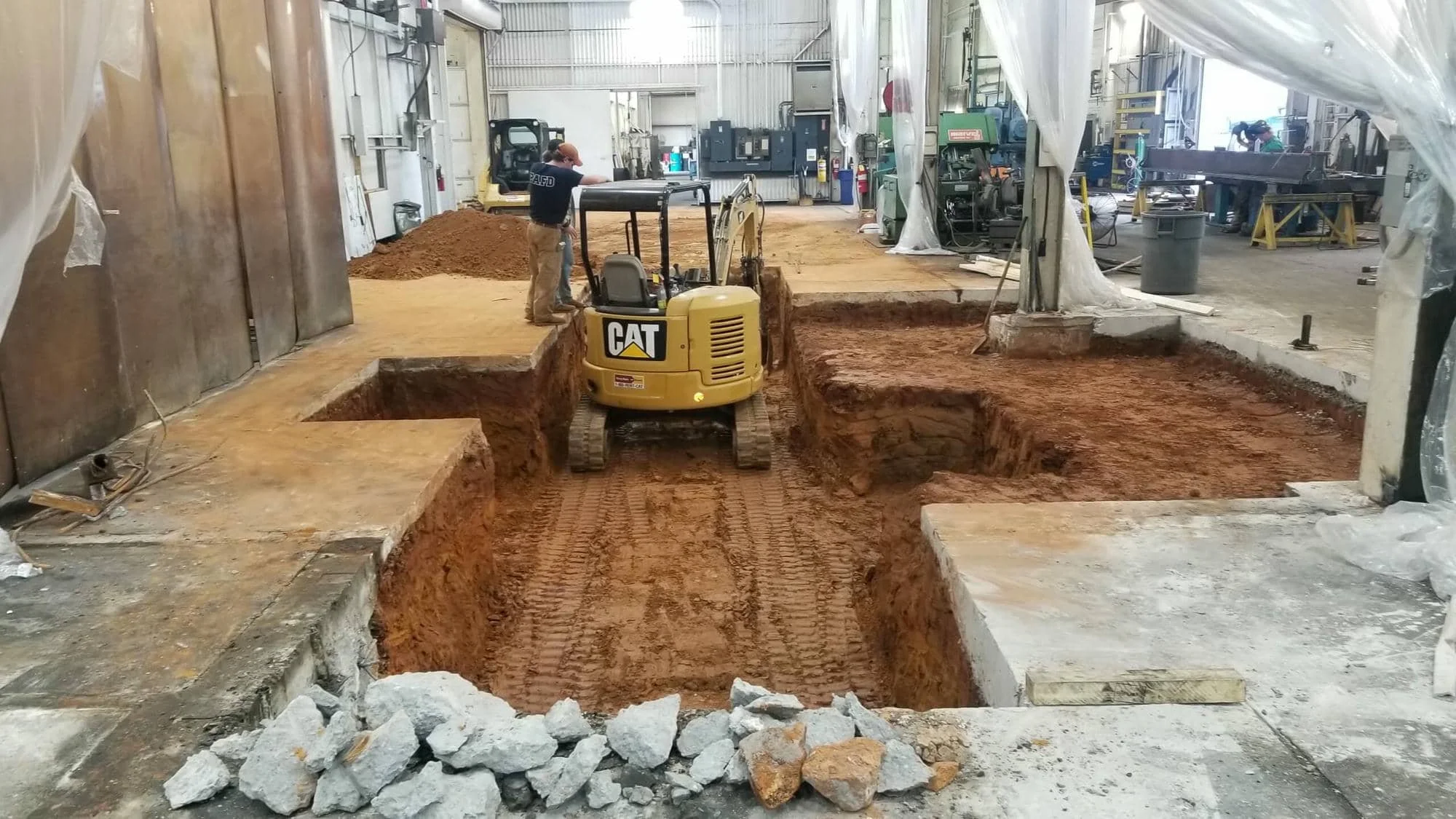
Four-foot-deep precision excavation inside an existing machine shop to prepare for a solid concrete foundation supporting a new large-scale CNC machine. Mableton, Georgia.

Laser-controlled precision grading and aggregate base preparation for a new synthetic-turf football field in Gainesville, Georgia, establishing the specified elevations and surface tolerances required for the finished field system.

Installation of a subsurface outfield drainage system for a baseball field at the Walnut Grove sports complex, integrating drainage into the field subgrade to manage water and support the finished playing surface. Walnut Grove, Georgia.

Site preparation, grading, drainage, and pavement preparation for a new HOA multipurpose sports court in Acworth, Georgia. J Wells prepared the court site and underlying base to support the finished paved surface, shown here after paving and before court coatings, fencing, and final improvements.
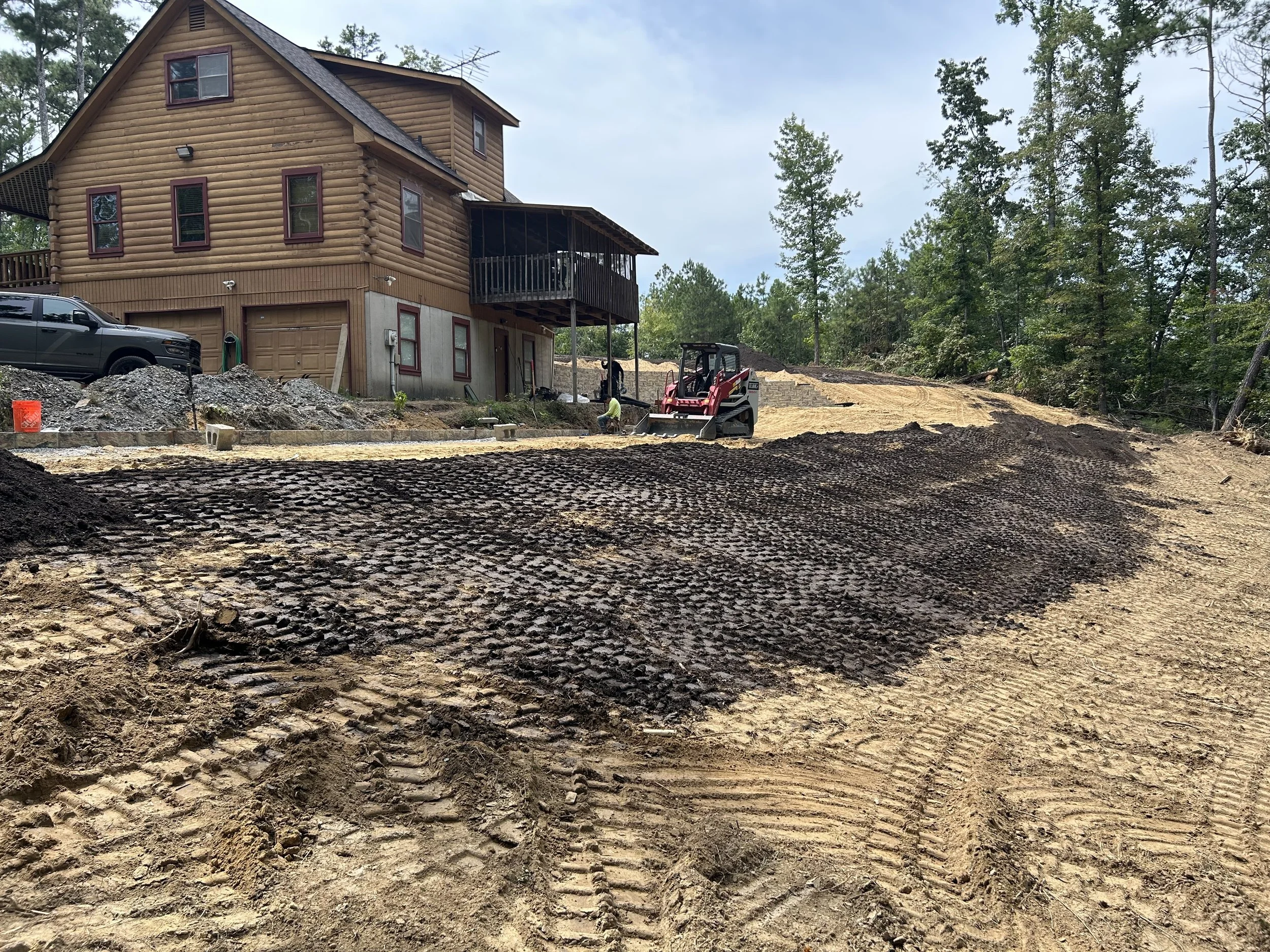
Major cut-and-fill grading for a Dallas, Georgia property, with more than 500 cubic yards of on-site soil excavated and redistributed to expand usable yard area and prepare the site for new retaining walls. Cuts exceeding three feet were carefully blended back into the existing upper landform, followed by seven tandem loads of imported topsoil for final grading and grass seeding.
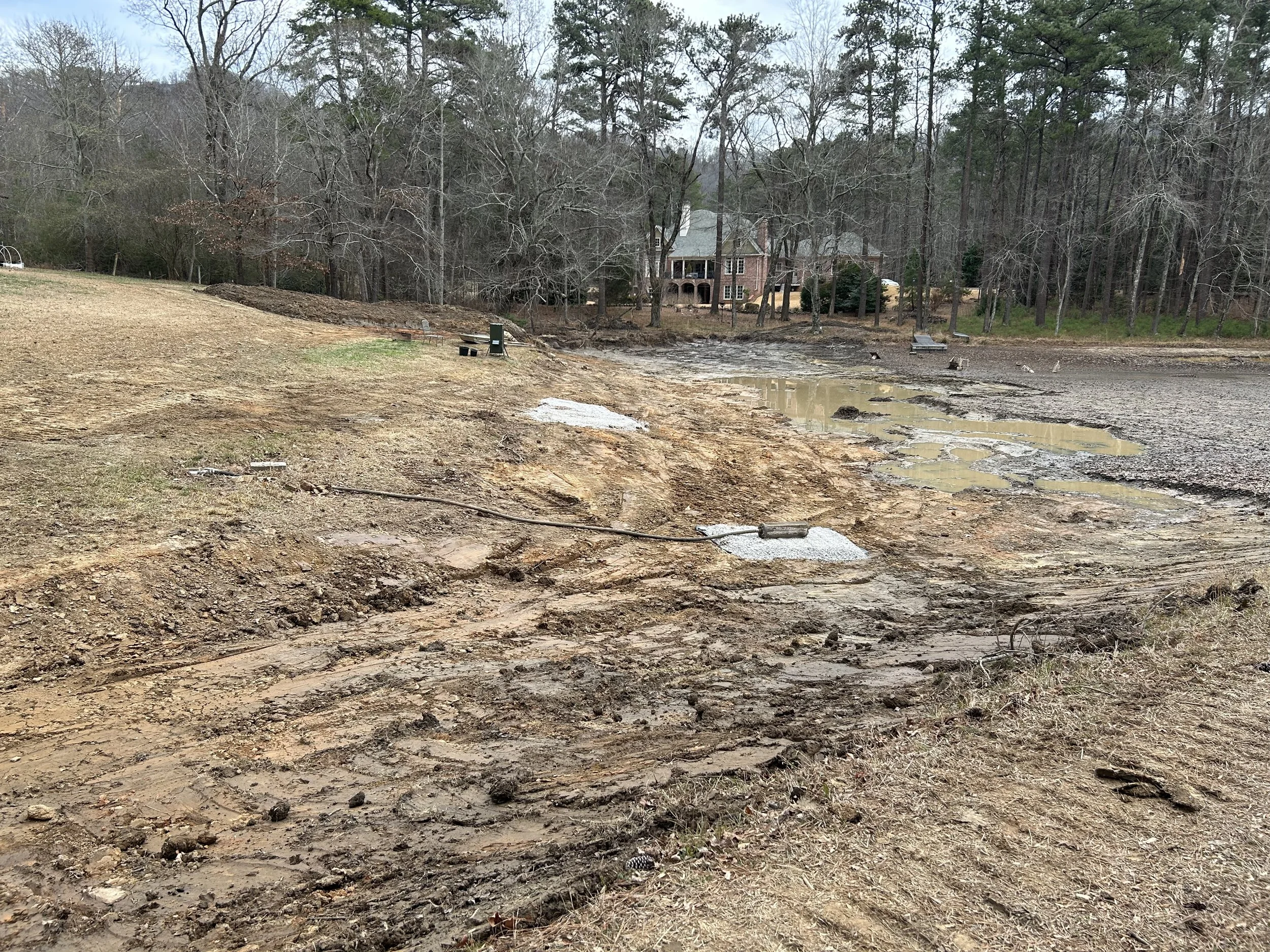
Targeted dredging and rehabilitation of a 1.5-acre pond in Kennesaw, Georgia, removing deep sediment from the primary collection areas while working through restricted wooded access and across a narrow existing dam. The project also included reconstruction of a severely eroded spillway, on-site material management, and geotextile and riprap stabilization—all completed with appropriately scaled equipment to preserve mature trees and protect the existing dam.